
The Absurdity of Sears Island Industrialization
An important message from our friend Steve Miller, executive director emeritus of the Islesboro Islands Trust.
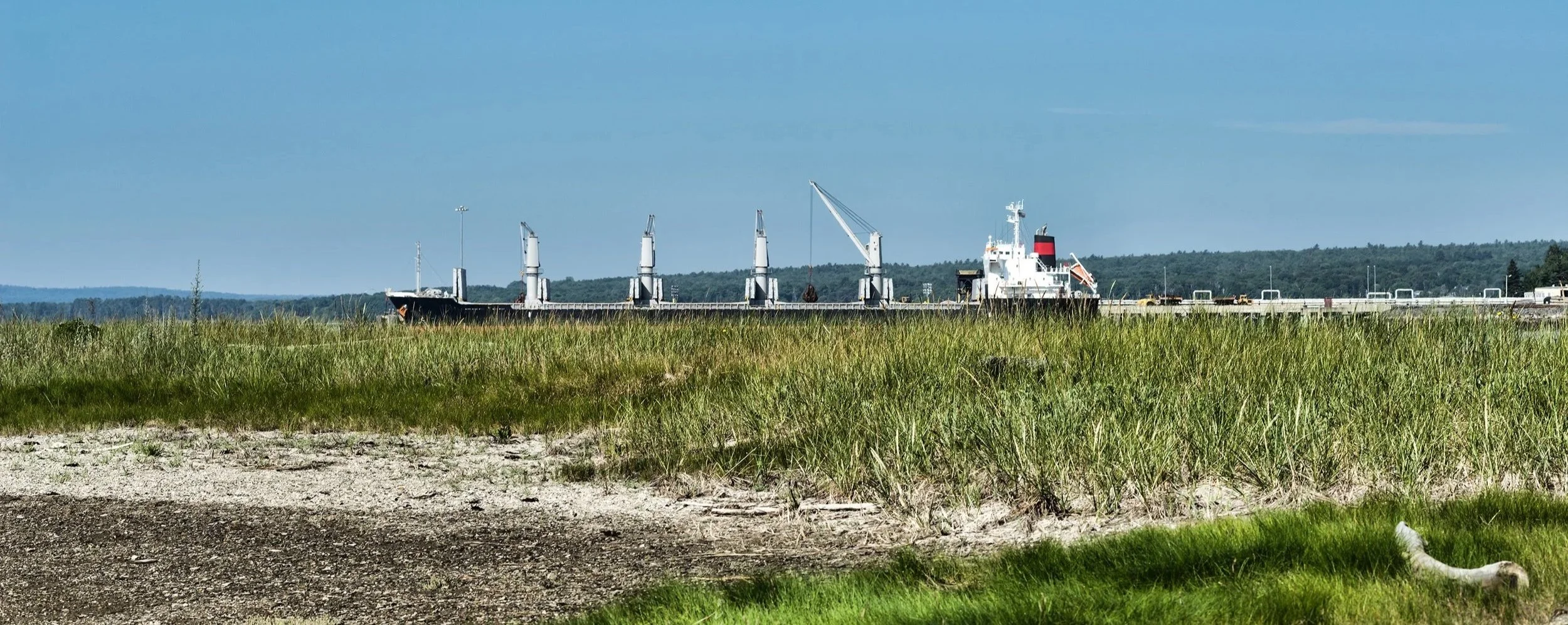
Of the numerous failed attempts to industrialize Sears Island (think oil refinery, nuclear power plant, LNG terminal, etc.), the extremely protracted, costly and arguably the most scandalous of these was the Maine Department of Transportation’s (MDOT) cargo port proposal from the late 1970’s until it was abandoned in 1996.
The 15-year failed attempt to develop an uneconomic cargo port on Sears Island next to and competing with Mack Point saw several scandalous blunders, including illegal filling of wetlands. But the required and failed clam flat mitigation work raised the bar for its glaring outrageousness.
The cargo port, like all industrialization proposals for Sears Island, needed vehicle and train access across the portion of Long Cove and Stockton Harbor between Kidder Point on the mainland and Sears Island. MDOT proposed building a 1,200 foot long, 125 foot wide, solid-fill causeway for the cargo port access, instead of a bridge. Although halted for years by lawsuits, eventually MDOT received permits for the causeway that required mitigation to compensate for loss of highly productive clam flats.
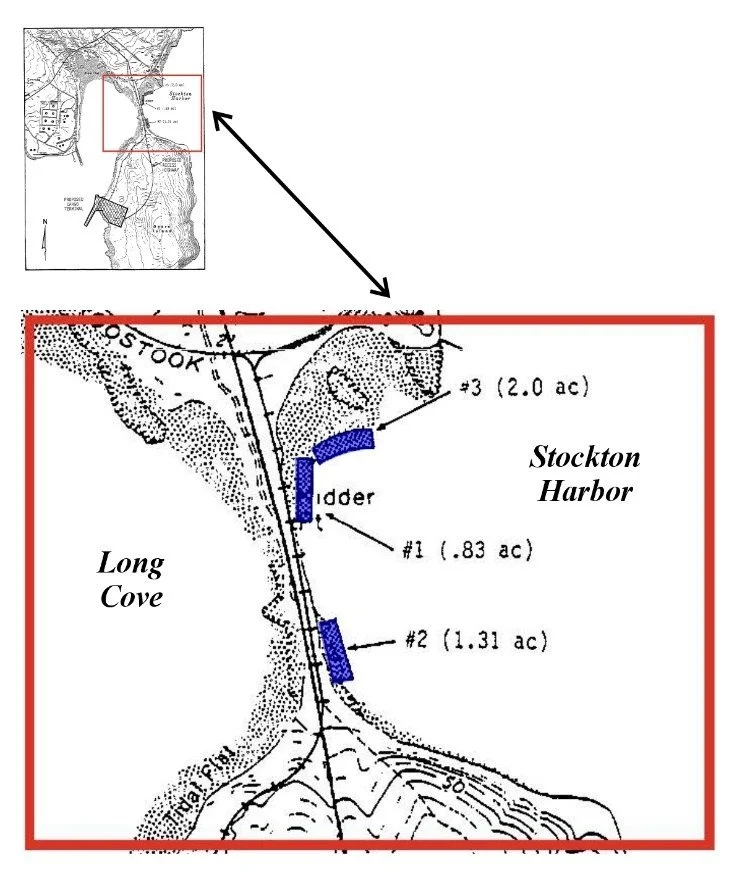
The mitigation, meant to accomplish something positive for the environment to offset the environmental harm produced by the causeway and jetty, called for creating three new clam “habitat enhancement” areas - two located beside the eastern edge of the solid-fill causeway and one located further east closer to the GAC facility (then Delta Chemical).
Employing the “destroy it to save it” strategy used by the US during the Vietnam war, MDOT began the mitigation work May 24, 1988 by first building a road across Stockton Harbor for access to the mitigation areas and then excavating the stones and cobble to at least a foot depth from approximately four acres of intertidal land. Although these mitigation areas did not support clams in 1988 when excavated, they did support a thriving benthic community important to fish nurseries and shorebirds. Adjacent clam flats were highly productive, including clam flats buried under the 150,000 square foot causeway.
Three Sears Island Clam Mitigation Sites
According to a report by Toni Mailloux in the June 9, 1988 edition of the Waldo Independent, “What I saw when I went to the entrance to the causeway was a bulldozer, two front-end loaders, close to a dozen dump trucks and several pick-ups out on the beach and along the sandbar.”
Mailloux dubbed the mitigation a “clamdominium.”
Contractor Bridge Construction spread 8,500 cubic yards of sand mined and hauled from an open pit in Prospect on top of the mitigation areas, a huge amount by anyone’s calculation. The Maine Department of Marine Resources (MDMR) harvested juvenile clams nearby and planted then in the “clean” (no organic material) sand.
According to MDMR’s Walter Foster at the time, the clam mitigation strategy was the first of its kind in Maine and may have been the first of its kind in the country.
However, the clam experiment failed spectacularly. No takers. The clamdominium remained vacant.
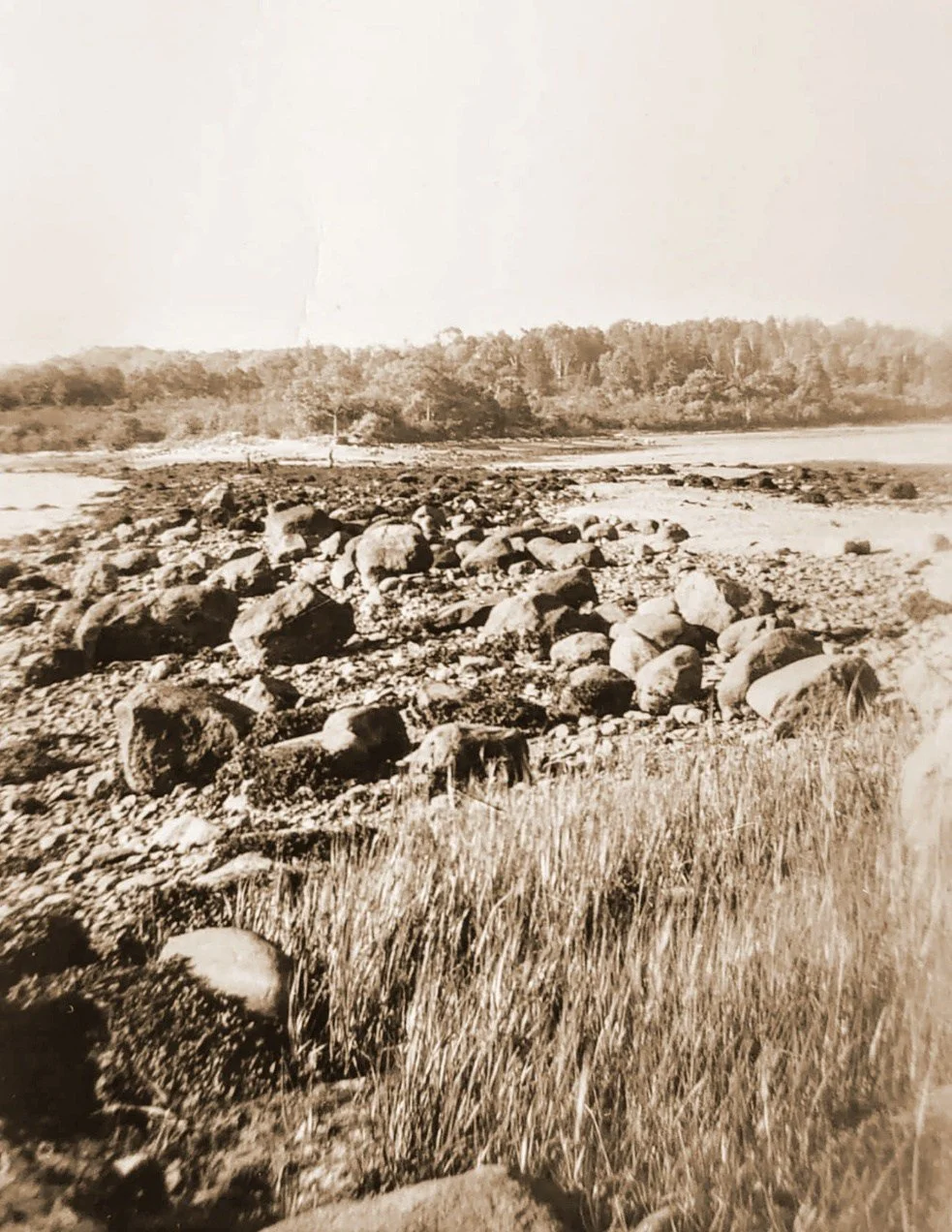
- Sears Island Sandbar Before the Causeway
National Marine Fisheries Service reported in 1994 that “the created clam flats do not have the basic physical and biological characteristics of natural mudflats, do not support the variety of organisms typically present in tidal flats, and do not compensate for the diverse intertidal habitat functions and values lost due to the construction of the causeway.”
The seminal “Evaluation of the Significance of Impacts – Sears Island Dry Cargo Terminal” from federal agencies concluded that, “Compensatory mitigation… failed. Also, the mitigation sites were created by filling existing valuable intertidal and subtidal habitats; therefore, the mitigation effort has resulted in a net loss of marine habitats.”
Let’s review that conclusion. MDOT’s plan to provide an environmental good to make up for Sears Island environmental damage not only failed the compensation part but actually created MORE environmental damage!
Now, forty years later, the clam mitigation and causeway environmental damage remains unacknowledged and uncorrected – a debt owed but not yet paid.
Of course, this is but one failure among several that led to abandonment of the Sears Island cargo port (and subsequent improvements at already industrialized, next-door Mack Point). Other attempts to industrialize Sears Island and Penobscot Bay also failed. Real justice for Sears Island can only come from permanent protection that provides environmental and cultural benefits well into the future. Its time to stop the “two-faced justice” of industrialization that scams cash and resources into the pockets of a few and meanwhile wastes millions of taxpayer dollars and energy.
Sincerely,
Steve Miller
Executive Director Emeritus, Islesboro Islands Trust
