
Penobscot Bay Waterkeeper Moves to Intervene in Juniper Ridge Landfill Expansion
Organization cites concerns over cumulative environmental impacts, including PFAS, toxic pollutants, leachate discharges, and fish contamination.
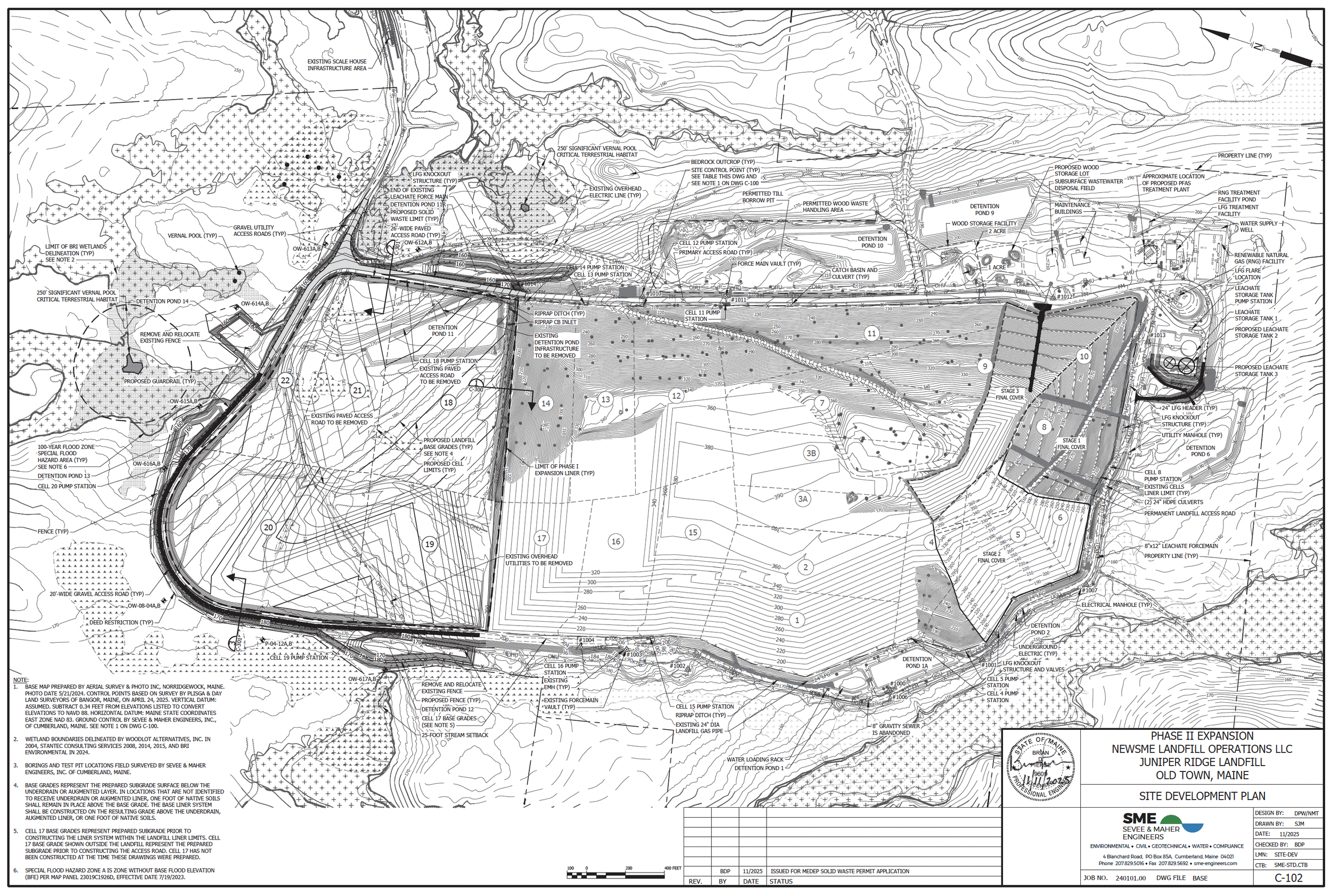
(Juniper Ridge Site Development Plans per Public Permit Documents)
BELFAST, Maine — Penobscot Bay Waterkeeper has formally petitioned to intervene in the state licensing proceedings regarding the proposed expansion of the Juniper Ridge Landfill in Alton and Old Town, arguing that the project could worsen toxic pollution and long-standing environmental burdens throughout the Penobscot River watershed.
The petition, filed with the Maine Department of Environmental Protection, raises concerns about increased landfill leachate generation, inadequate treatment of toxic contaminants including PFAS (per- and polyfluoroalkyl substances), mercury, dioxins, and PCBs (Polychlorinated Biphenyls), and the long-term impacts on downstream waters connected to Penobscot Bay.
According to the filing, landfill leachate from Juniper Ridge is transported to wastewater treatment facilities that provide only conventional treatment before discharging into the Penobscot River system. The petition argues that existing discharge permits do not adequately evaluate or monitor PFAS and other toxic pollutants associated with landfill leachate.
“Communities throughout the Penobscot watershed are already living with the legacy of mercury, dioxins, PFAS, and PCB contamination in the river system,” said Pete Nichols, Executive Director of Penobscot Bay Waterkeeper. “Expanding Maine’s largest landfill without fully addressing how toxic contaminants will be managed threatens to deepen an existing public health and environmental crisis.”
The organization argues that the proposed expansion could substantially increase long-term contaminant loading into the Penobscot River system and exacerbate cumulative environmental burdens already borne by downstream communities, fishermen, shellfish harvesters, and residents who rely on the watershed for their livelihoods, recreation, and sustenance.
The petition specifically questions whether the state has adequately evaluated:
The impacts of PFAS and other persistent contaminants in landfill leachate;
Risks to groundwater, wetlands, tributaries, and downstream waters;
Fish consumption and bioaccumulation risks;
Cumulative environmental justice impacts;
Long-term financial assurances and post-closure obligations;
Climate, air quality, odor, and truck traffic impacts; and
Whether continued landfill expansion is consistent with Maine’s waste reduction and recycling policies.
“The public deserves confidence that the full range of contaminants associated with landfill leachate — including short-chain PFAS compounds and other bioaccumulative toxics — are being properly evaluated before permits are issued,” Nichols said. “The Penobscot River is already impaired by multiple toxic pollutants. The state has an obligation to fully evaluate whether this expansion will further pollute a watershed that Maine people depend on.”
Penobscot Bay Waterkeeper also expressed concern that current treatment technologies may not effectively remove or destroy PFAS compounds and could instead transfer contamination into secondary waste streams requiring additional disposal and management.
The organization’s filing notes that members and supporters throughout the watershed — including fishermen, lobstermen, oyster farmers, and recreational users of the Penobscot River and Bay — could be directly affected by increased contamination and degradation of water quality.
“People who live, work, and play in the watershed rely on these waters for food, livelihoods, recreation, and cultural connection. ” Nichols said. “Downstream communities should not bear the risk of incomplete science, inadequate monitoring, or regulatory blind spots involving toxic pollutants.”
The intervention request seeks full-party status in the proceeding so the organization can review technical materials, submit testimony and evidence, and advocate for stronger protections for water quality, public health, fisheries, and downstream communities.
###
Penobscot Bay Waterkeeper is a non-profit, 501(c)(3) organization made up of small business owners, educators, scientists, farmers, artists, historians, civil servants, and community activists. They envision a thriving Penobscot Bay watershed that nurtures all life, and work everyday to fulfill their mission to boldly advocate for the health of Penobscot Bay Watershed through science, public action, and community engagement.
