
Restoring Wild, Resilient Lands and Waters at the Little River Station
We are slowly but thoughtfully building our vision towards creating a community-based hub at the Little River Station that actively supports the rewilding of water and land, establishes ecological resiliency, and introduces the public to those concepts.
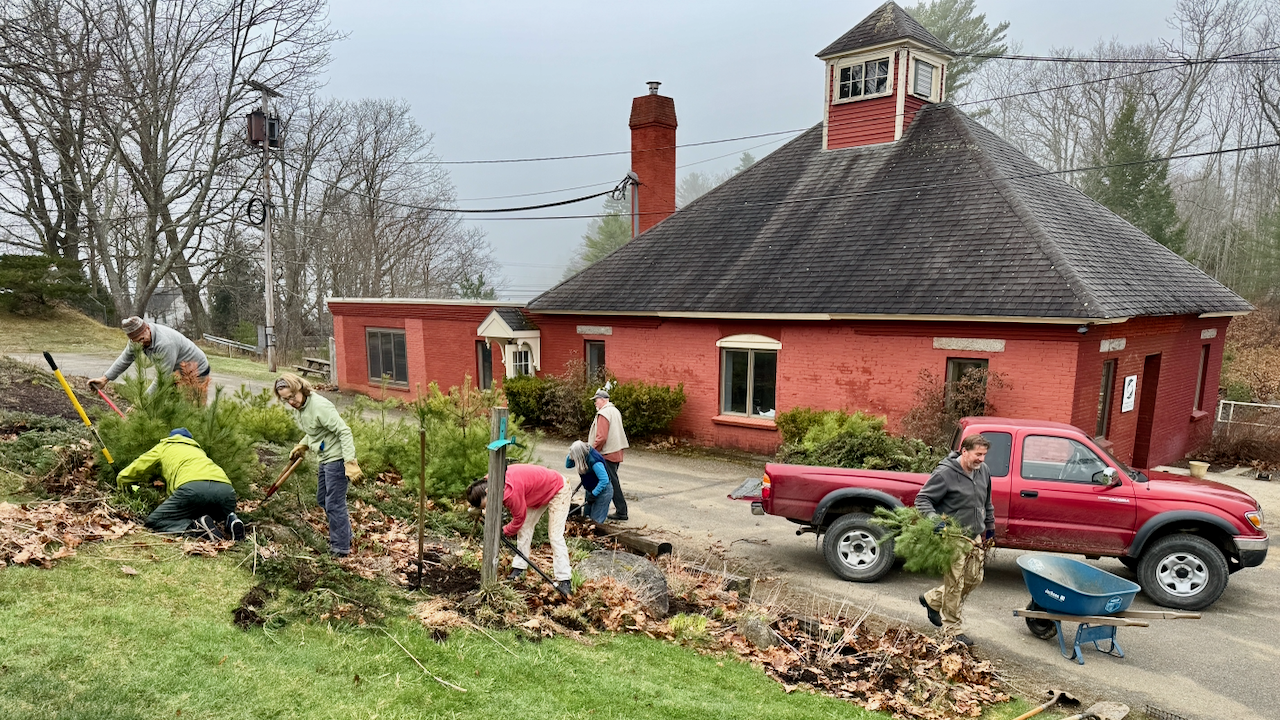
First and foremost we wish to thank all of our wonderful volunteers for their help in preparing the existing garden beds for native plants!
We’d also like to thank Wild Seed Project folks for coming out to offer us guidance and advice. If you are not familiar with Wild Seed Project - definitely check them out. They are doing fantastic work guiding community members on restoring native plants that expand wildlife habitat, support biodiversity, and build climate resilience.
We also wish to thank Tracy Weber, native landscape designer and former owner of Blue Aster Native Plants, for her ongoing help in designing the hummingbird bed, and Deb Soule at the Herbal Hummingbird Hub (another fantastic organization to connect with) for guiding us through this process. Our friend Teddy Matteson of Dirtgoat Permaculture, a regenerative landscaping and education business based in Belfast, helped us assess how to reclaim the site, and Sara and Amanda from Rooted Elements offered sage advice. We’re also grateful to Penobscot Bay Waterkeeper board president, Jonathan Fulford for his donation of four highbush blueberries and Pat Harpell of Maine Fibershed for the gift of two lovely willows.
We are very excited so many of you share our vision of rewilding this site to support native plants, pollinators and all of our wild kin! To learn more about the meaning and work behind rewilding, and to understand the root meaning of “wild” (self-willed), we highly recommend these sites: https://rewilding.academy/un-decade-on-ecosystem-restoration/ and more locally https://newildernesstrust.org/about/#approach.
We see every step of this process as a chance to educate ourselves and the community on what it takes to rewild a landscape, and this one large bed is teaching us what it can sometimes take to transform a conventional ornamental bed into a life giving array of native plants.
The bed contains so many years of bark mulch and layers of landscape fabric along with deeply rooted ornamentals, that we’ve been advised to bring in a backhoe to carefully remove all of this material while not damaging the roots of the beautiful twin oaks at the top of the bed. As older trees these oaks are providing essential habitat and food for numerous insects and animals! We will then lay down a thick layer of wood chips or other organic matter to give the soil a full year to rest and regenerate.
Nature teaches many things, including patience! We look forward to sharing an illustration of the hummingbird garden bed from Tracy, and to working with everyone to plant this bed next spring!
Again, many many thanks to all for joining us on this important effort that compliments our mission to make sure all the waters of the Penobscot Bay watershed are swimmable, drinkable, and fishable!
